
Workflow Automation for Industrial SMBs: Where It Works and Where It Doesn’t
Automation can dramatically improve industrial operations—but only in the right places. This article explains where automation delivers real ROI, and where manual processes still make more sense.
AUTOMATIONAI IN OPERATIONS
11/29/20252 min read

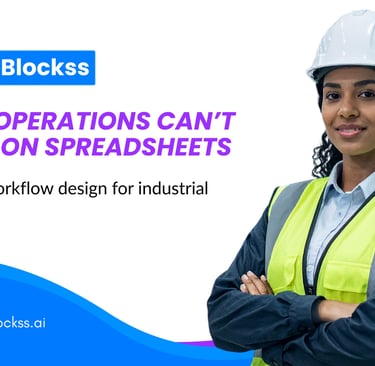
Workflow Automation for Industrial SMBs: Where It Works and Where It Doesn’t
Automation has become a key priority for industrial SMBs. Rising demand, tight labor capacity, and customers expecting faster turnaround make automation a powerful lever for improving operations.
But one misconception leads to failed projects:
automation is not for everything.
Some workflows benefit enormously. Others don’t.
Here’s a practical guide to understanding where automation creates value—and where manual control is still the better choice.
Where Automation Works Best
1. Repetitive, Rules-Based Tasks
If a workflow follows clear logic—if X happens, do Y—automation is ideal.
Examples:
converting purchase requests into orders
generating pick lists
updating order statuses
notifying teams of delays or exceptions
2. Approval Flows
Email-based approvals slow operations. Automated approvals improve speed and traceability.
Use cases:
PO approvals
quote approvals
inventory adjustments
quality checks
3. Data Sync Between Systems
When teams rely on multiple systems, manually updating data leads to errors.
Automation ensures accurate, real-time updates.
4. Communication & Alerts
Automated notifications prevent tasks from slipping through the cracks.
Examples:
low-stock alerts
overdue work orders
delayed shipments
QC failures
5. Routine Reporting
Automated dashboards reduce manual Excel work and give leaders visibility instantly.
Where Automation Does NOT Work Well
1. Tasks Requiring Judgment or Nuance
If a decision depends on experience or situational awareness, full automation may reduce accuracy.
Examples:
complex QC assessments
custom quoting that varies heavily by client
urgent exceptions requiring human review
2. Poorly Defined Workflows
Automating a broken process only creates faster chaos.
Clarity must come first.
3. Highly Variable Work with Many Exceptions
Processes that change daily need partial automation—not full automation.
4. When Tools Are Disconnected
Without a unified system (Industrial OS™), automation becomes fragile and unreliable.
A Balanced Approach to Automation
Industry-leading SMBs succeed with automation because they:
clarify workflows first
automate only high-value steps
standardize before scaling
combine people + automation together
This is the foundation behind the BlueBlockss™ approach.
How BlueBlockss™ Supports Automation
Automation becomes powerful when built on top of:
Blueprint™ → Core System™ → Industrial OS™ → CustomX™ → Optimize+™
This ensures automation is:
stable
accurate
scalable
aligned with real operations
If you're considering automation, start with clarity—not code.
Need Help Automating the Right Way?
We help SMBs automate workflows that matter most, ensuring the right balance between people, systems, and intelligent automation.
Book a free discovery call.
BlueBlockss
Modernizing Industrial Operations with AI & Automation.
Company
Solutions
Resources
Toronto, Canada
© 2025 BlueBlockss Ltd. All Rights Reserved.